
Last Updated: November 7, 2026
Quick Summary
Gluten free performance supplements are products formulated without wheat, barley, rye, or their derivatives, and manufactured under controls that prevent cross-contact with those grains. Read past the front label, since a gluten-free claim covers the formula but not always the line it ran on. Oh!mino® products are vegan, gluten-free, and dairy-free.
- A made in a facility that also processes wheat note is a warning, not a guarantee of safety.
- Malt flavoring, modified food starch, and some thickeners are common hidden gluten sources.
- The caffeinated Oh!mino Muscle Synthesis Activator Tropical Splash contains 100 mg pharmaceutical grade caffeine.
- Oh!mino Creatine Complex delivers 3 grams of free-form creatine per lemon-lime scoop.
- Every Oh!mino order is backed by our 110% Satisfaction Guarantee.
Table of Contents
- What Makes a Performance Supplement Truly Gluten Free
- Gluten Free Pre Workout Options for Energy and Focus
- Choosing a Gluten Free Protein Powder
- Gluten Free Creatine for Strength and Power
- Gluten Free Recovery Supplements for Post-Workout Repair
- How to Build a Supplement Plan by Training Goal
- Side Effects, Interactions and Who Should Check First
- Building Your Gluten Free Stack with Oh!mino
- Frequently Asked Questions
What Makes a Performance Supplement Truly Gluten Free
Gluten free performance supplements are products formulated without wheat, barley, rye, or their derivatives, and manufactured under controls that prevent cross-contact with those grains, which is why athletes now shop for gluten free performance supplements with more care than ever. For athletes with celiac disease or gluten sensitivity, that distinction matters more than the marketing claim on the front of the tub. Oh!mino products are vegan, gluten-free, and dairy-free.
Here is the uncomfortable truth most guides skip. A product can carry a gluten-free claim and still sit in a facility that also handles wheat-based ingredients. The claim speaks to the formula, not always to the line it ran on.
So how do you tell the difference? You read past the front label.
Reading Labels and Cross-Contamination Controls
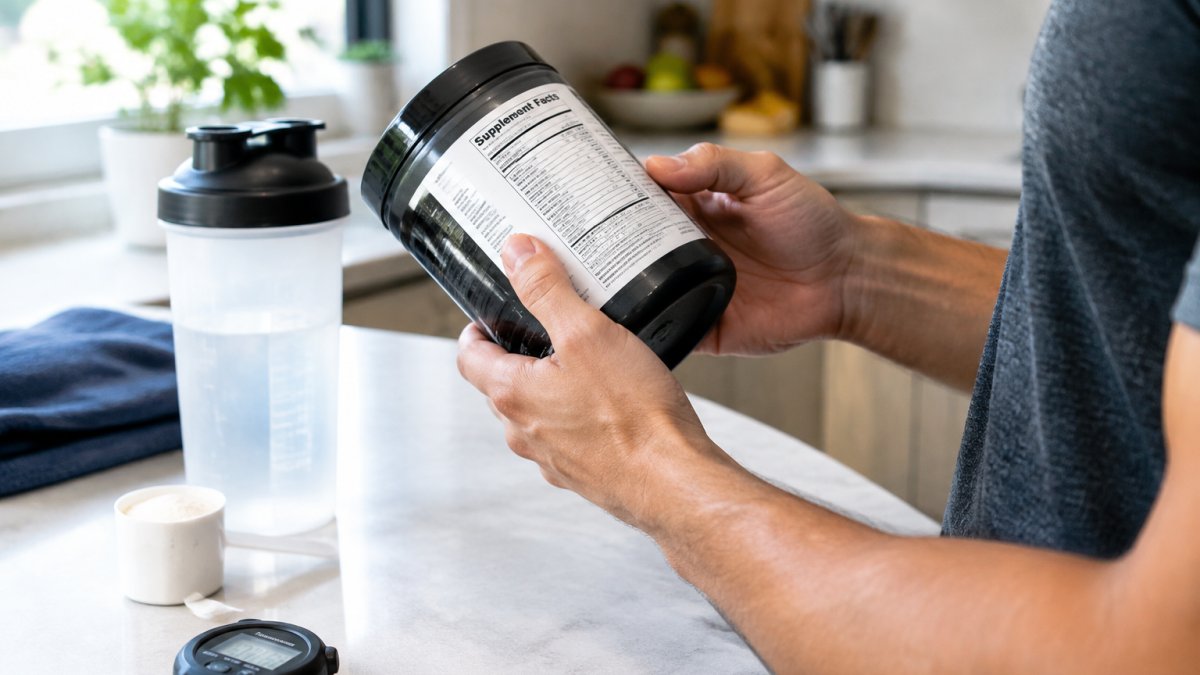
Start with the ingredient panel, then work outward. Check every ingredient against the common gluten sources, then read the allergen and facility statement. The FDA guidance on gluten-free food labeling sets the threshold for a gluten-free claim in the United States: under 20 parts per million of gluten.
Watch for these common trouble spots:
- Shared facilities. A "made in a facility that also processes wheat" note is a warning, not a guarantee of safety.
- Hidden sources. Malt flavoring, modified food starch, and some thickeners can carry gluten.
- Flavored and coated products. Seasonings and sweeteners are frequent culprits.
- Bulk bins and shared scoops. Cross-contact happens in the gym bag as easily as the factory.
If you have celiac disease, read the full label and allergen statement every time, not just the front of the tub. The Celiac Disease Foundation's guidance on gluten-free labeling explains why trace exposure still matters for some athletes.
Gluten Free Pre Workout Options for Energy and Focus
The best gluten free pre workout is one that delivers clean energy and focus without gluten-based fillers, and the choice between caffeinated and stimulant-free formulas comes down to your training time and how you handle caffeine. Most pre-workout problems trace back to underdosed ingredients or a stimulant load that leaves you jittery and crashing.
Before you compare flavors, compare the ingredient panel against the doses that actually show up in research.
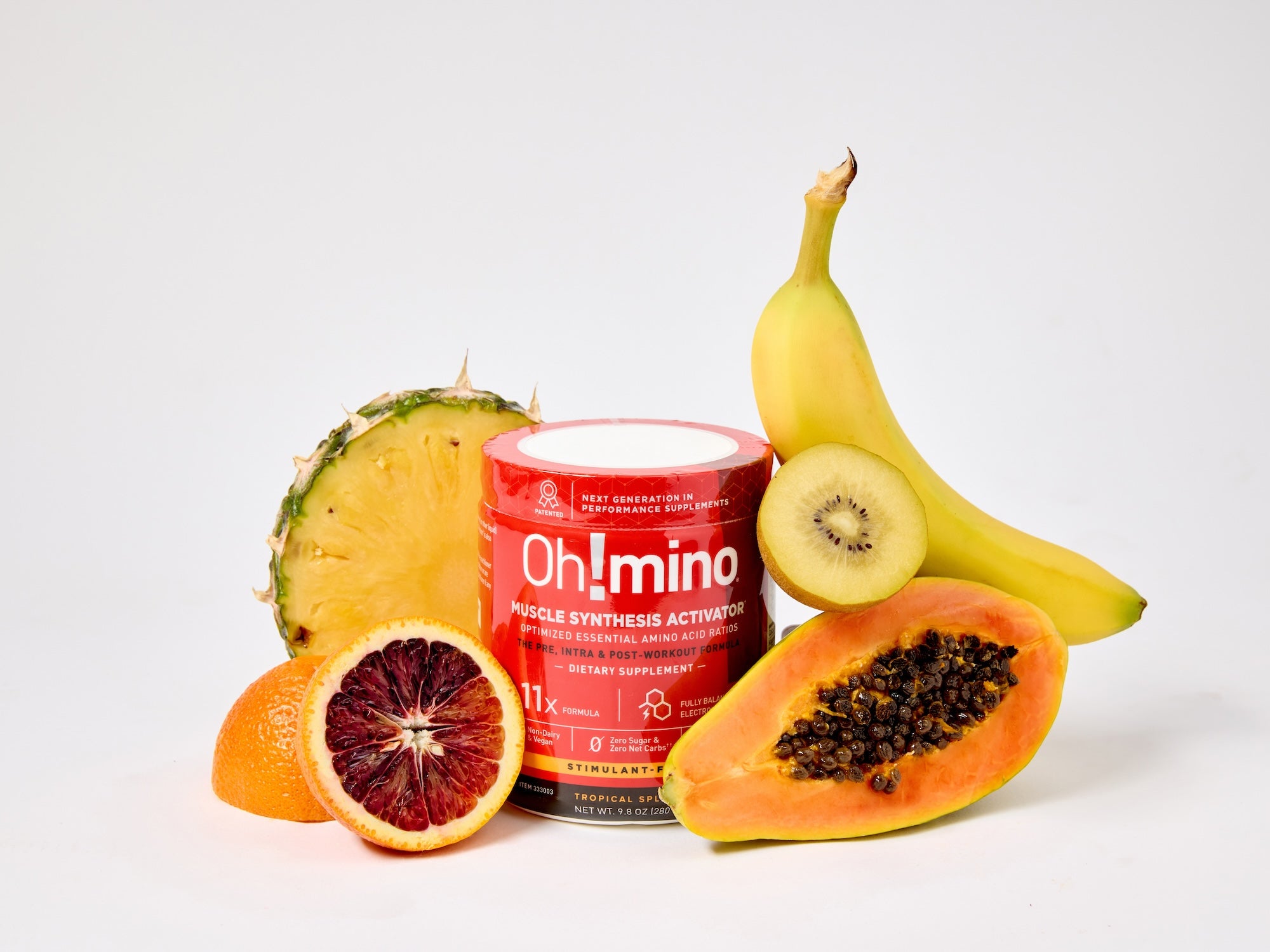
Our caffeinated pick is the Oh!mino Muscle Synthesis Activator Tropical Splash with 100 mg pharmaceutical grade caffeine. It pairs all nine essential amino acids, balanced electrolytes, and adaptogens.
If you train early and want the lift, browse our full range of caffeinated supplements to compare formats before you commit.
Stimulant-Free vs Caffeinated Formulas
Stimulant-free formulas suit evening sessions, caffeine-sensitive athletes, and anyone stacking multiple products. Caffeinated options give a faster perceived energy boost and can help with early-morning focus. Neither is "better" in the abstract; the match depends on when you train and how you sleep.
Our stimulant-free supplements collection covers both powder and capsule formats.
Reading a Pre-Workout Label for Gluten and Dosing
Flavored pre-workout powders are where hidden gluten tends to show up, so scan the panel for malt flavoring, modified food starch and thickeners. Then check the dosing: the label should state the caffeine per serving, so you can add up your total for the day.
Watch out: stacking a caffeinated pre-workout with coffee and an energy drink is the most common self-inflicted problem we hear about, and it can push total caffeine past comfortable levels and disrupt the sleep that recovery depends on.
Choosing a Gluten Free Protein Powder
A gluten free protein powder should deliver a complete amino acid profile without gluten, dairy, or unnecessary fillers, and the right format depends on your digestion and your goals. Whey protein isolate is typically lower in lactose than concentrate, while plant proteins suit dairy-free athletes but vary widely in amino acid balance.
Three things decide the purchase:
- Protein source and isolate quality. Isolate removes more lactose and fat than concentrate.
- Amino acid profile. Check that all nine essential amino acids appear in meaningful amounts.
- Mixability and taste. A powder that clumps or tastes chalky ends up in the back of the cupboard.
For athletes with dairy sensitivity, a dairy-free essential amino acid formula can replace or supplement a daily shake. The NIH overview of dietary supplements is a useful starting point for understanding what each ingredient actually does before you buy.
Gluten Free Creatine for Strength and Power
Gluten free creatine supports strength, power output, and repeated high-intensity efforts, and the monohydrate form remains the most studied option available.
Our Oh!mino Creatine Complex combines micronized creatine hydrochloride and monohydrate with adaptogens, delivering 3 grams of free-form creatine per lemon-lime scoop. It stacks with our Muscle Synthesis Activator but works on its own. Take it before and after training, mixed with 8 to 12 ounces of water.

Verifying Gluten Safety in Creatine
Flavored and micronized creatine products are where cross-contact and hidden gluten can enter, through shared facilities, flavoring systems, and thickeners. Read the full ingredient list and the facility statement, not just the front label.
One caveat worth stating plainly: the product is not intended for anyone under eighteen. If you are managing kidney concerns or taking medication, clear creatine with your doctor first.
Gluten Free Recovery Supplements for Post-Workout Repair
Gluten free recovery supplements support post-workout repair by supplying amino acids and electrolytes the body uses to rebuild muscle and restore fluid balance. Recovery is where most athletes underspend their attention, then wonder why soreness lingers into the next session.
The evidence for essential amino acids here is worth knowing. Research published in The Journal of Nutrition on protein blends and muscle protein synthesis found that amino acid delivery after resistance exercise stimulates muscle protein synthesis, which is the repair process itself.
Our stimulant-free Muscle Synthesis Activator in Tropical Splash contains all nine essential amino acids in an optimized ratio, a balanced 5-electrolyte complex and adaptogens, and it contains zero sugar and zero carbs. Take it pre, intra, or post-workout.
Oh!mino® Muscle Synthesis Activator† – Stimulant-Free Tropical Splash
How to Build a Supplement Plan by Training Goal
Build your plan around three variables: goal, timing, and total daily intake from food. Supplements fill gaps; they do not replace meals. Here is the framework we recommend.
Training Goal |
Primary Product |
Timing |
Frequency |
|---|---|---|---|
Strength and power |
Creatine Complex |
Pre and post workout |
Daily |
Hydration on long sessions |
Stimulant-free EAA powder |
Intra and post workout |
Training days |
Focus and energy |
Caffeinated EAA formula |
30 minutes pre workout |
Training days |
Recovery and repair |
Stimulant-free EAA, capsules or powder |
Post workout |
Daily |
Travel and busy days |
EAA capsules |
Between meals |
Daily |
Pair the plan with real food. Carbohydrate and protein around training still do most of the work, and hydration deserves the same attention as any powder in your bag.
Side Effects, Interactions and Who Should Check First
Anyone with health conditions or taking medication should check with a clinician before starting.
If you are recovering from surgery or injury, ask your doctor whether an essential amino acid supplement fits your situation before adding one.
Building Your Gluten Free Stack with Oh!mino
The simplest stack for most athletes is two products: a Muscle Synthesis Activator for daily amino acid and electrolyte support, and a Creatine Complex for strength work. Both are vegan, gluten-free, dairy-free, and free of artificial flavors, colors, and sweeteners.
Muscle Synthesis Activator contains all 9 essential amino acids in an optimized ratio, plus a balanced 5-electrolyte complex and adaptogens. Every Oh!mino order is backed by our 110% Satisfaction Guarantee.
"I've spent 33 years in the supplement industry, and we only launch a product when there is solid science behind it." Michael Maynard, Founder, Oh!mino
Get started with Oh!mino and build a gluten free performance stack you can trust label to label.
If you have been guessing at gluten-free safety, stop guessing. Start with a clearly labeled formula, read the panel, and match the product to your training goal. Oh!mino gives you vegan, gluten-free, dairy-free formulas with a balanced 5-electrolyte complex and all 9 essential amino acids, backed by our 110% Satisfaction Guarantee. Get started with Oh!mino and train with confidence.
† These statements have not been evaluated by the Food and Drug Administration. This product is not intended to diagnose, treat, cure or prevent any disease.
Frequently Asked Questions
How can I tell whether a performance supplement is gluten free?
Start with the label. A gluten-free claim in the United States means the product meets the FDA threshold of under 20 parts per million of gluten. Then review the full ingredient list for wheat, barley, rye, malt and brewer's yeast, and read the allergen and facility statement to see whether gluten-containing ingredients are handled on site. If anything is unclear, ask the manufacturer how they test.
Can people with celiac disease take creatine?
Creatine itself is naturally gluten free, so the ingredient is not the problem. The risk sits in how the product is manufactured and what else is in the tub, including flavorings, fillers and shared production lines. Choose a gluten free creatine with a clear ingredient list and a facility statement. If you have celiac disease, ask the manufacturer how they test for gluten before adding it to your routine.
Are gluten free pre-workout supplements effective?
Yes. Going gluten-free changes what is left out of a pre-workout, not how the active ingredients work. What matters is the ingredient profile: caffeine dose, amino acids, electrolytes and any adaptogens. Check that the stimulant level suits your tolerance and that the label states the caffeine per serving.
What should athletes look for in a gluten free protein powder?
Look at the protein source first, since whey, pea, rice and soy all behave differently in the body and the gut. Then check the serving size against the protein content, so you know how much you actually get per scoop. Confirm the gluten-free claim and read the allergen statement, and scan for added sugars or artificial sweeteners if those bother you. Athletes with dairy sensitivity should also confirm the product is dairy free, not just gluten free.
What does a gluten-free claim on a supplement actually mean?
In the United States, a gluten-free claim means the product contains less than 20 parts per million of gluten, the threshold the FDA set for gluten-free labeling. The claim applies to the finished product, so it is the manufacturer's responsibility to meet it. For anyone with celiac disease or a serious sensitivity, also read the allergen and facility statement, and ask the manufacturer how they test and how shared lines are cleaned between runs.


