

Key Takeaways
-
Quality sleep directly impacts cognitive health, muscle growth and overall daily energy.
-
Obtaining sleep is easier with preparation, including less screen usage, mindful eating times and performing various calming activities.
-
Keeping a dark, quiet atmosphere with minimal distractions will enhance one’s sleep quality.
-
Taking a balanced Essential Amino Acid supplement before bed will improve one’s muscle recovery during the time that the body seeks most to synthesize lean tissue.
-
Enhance gains with Oh!mino® Muscle Synthesis Activator and Creatine Complex, delivering all nine essential amino acids, including BCAAs, electrolytes, and adaptogens to accelerate muscle growth, recovery, and performance.
Sleep Hacking for Athletes: Maximizing Recovery with Limited Time
Our sleep is a much discussed aspect of living. For some, sleep comes easily and in large amounts. For others, sleep feels harder to come by and seems to be maddeningly elusive. Regardless of one’s current relationship to sleep, it must be prioritized due to its massive effect on one’s life. One should act in accordance with sleep, doing what is reasonable and possible to maximize one’s ability to rest well. This does not just occur right before bedtime, it affects how one lives his daily life.
|
Oh!mino©: Elevate Your Performance. Accelerate Your Recovery. Science-Backed Superiority for Every Fitness Journey Power Your Goals with Proven Results:
The Oh!mino® Advantage: ✓ Patented formula that’s 11x more effective than protein, 20x more effective than BCAAs Choose Your Perfect Formula: Available in refreshing Tropical Slash or Berry Blast flavors, with stimulant-free or caffeinated options. Prefer capsules? We've got you covered with the same powerful formula. Take before, during, or after training—one solution for your entire workout. |

The Importance of Sleep
Everyone knows that sleep is vital for health, but not everyone acts in this fashion. However, sleep must be prioritized due to its direct benefit for cognitive health and muscle recovery. With more quality sleep, the athlete will experience less fatigue both during the day and during training sessions. Understanding the benefits of sleep should spur one to prioritize it over many other activities.
Cognitive Health
As one gets more sleep, the brain is able to categorize information and solidify important neurological connections. Without adequate sleep, the brain will not have enough energy to function properly during the day–this is why one feels foggy and sluggish when sleep deprived. The brain can rest and recover when asleep, prolonging the life of one’s grey matter and sustaining vital neurological tissue.
Muscle Recovery
The body seeks to recover muscle the most when asleep. Muscle synthesis happens during the day when the body has enough amino acids, but this process is centralized when the athlete is asleep. Without enough sleep, the individual will feel fatigued and sore more frequently, due to the body having inadequate amounts of time for rest and recovery. Obtaining quality sleep will allow the athlete to recover and have quality strength for all upcoming workouts.
Less Fatigue
With more sleep throughout the night, the athlete will have less fatigue during the day. Many wish to wake up feeling rested and avoid an energy crash in the afternoon. Instead of relying solely on caffeine to pull one through the day, try prioritizing sleep. More quality sleep will allow for an energized day and less perceived fatigue during one’s training sessions.
Preparing for Sleep
Just like every other activity in life, one must prepare for sleep in order to obtain the most beneficial outcome. One can do myriad activities before going to sleep, but not all activities will promote a good night’s rest. One should be consistent in actions that work toward proper sleep, such as putting screens away and not eating heavy meals within two hours of falling asleep. Additionally, practicing any of a host of calming activities will do much to ready the brain for sleep.
Putting Screens Away
It may be tempting to watch TV or scroll through social media whilst in bed, turning it off mere seconds before closing one’s eyes. In doing this, one is thrusting themselves toward an action with which the brain is not prepared to engage. One should strive to ditch screens at least one hour before hitting the hay. This allows for the brain to wind down from the flashing and flickering lights that so strongly stimulate.
Eating Two Hours Prior
One should aim to eat their large, evening meal at least two hours prior to sleep. This allows for the body to adequately digest fats and proteins, which takes longer for the body to dissolve. Some small snacks can benefit the athlete before bed, such as greek yogurt, honey, granola and/or bananas. Some of these and similar foods will help to balance blood sugar levels, as well as slowly release protein throughout the night, supporting muscle recovery.
Do Calming Activities
The individual can engage in any one of many calming activities prior to sleep. Drinking non-caffeinated tea, reading a book, spending time with loved ones, stretching/doing light yoga, sitting outside to enjoy the evening nature, etc. These and other actions will calm the individual, preparing the mind to slip into a deep and refreshing sleep. Practicing these habits nightly will directly support muscle recovery, as the athlete will be obtaining quality sleep each night.

Woman sleeping in bed.
The Right Atmosphere for Sleep
The right atmosphere is needed to get adequate rest. No wonder one cannot sleep in a factory or in a pool! The circumstances around sleep matter for its quality. Such attributes that affect sleep include darkness, cool temperature and minimal distraction. A combination of these factors will yield consistently good sleep, directly supporting the athletic recovery of the individual.
Darkness
Keeping one’s room dark is a simple and often overlooked tool in creating proper sleep. Purchasing black-out curtains and blocking all excess light will tell one’s brain that it is time to shut down. If one is unable to completely darken a room, using an eye mask will allow for a similar effect on the brain, telling it to shut down for the night.
Cool Temperature
Every individual has a different preference for external temperature when sleeping. If one has found a temperature that works for them, then stick with that! For others, finding the right temperature feels more tricky. Most sleep studies have shown that keeping one’s room cooler during the night (if possible) yields the highest quality sleep.
Minimize Distraction
Scrolling through one’s phone in bed or watching TV from the covers are easy distractions that often delay sleep’s onset. The time spent engaging with these activities and the extra minutes one’s brain will require once the distractions are put down will multiply. Other distractions can include snacking, reading or drinking. Putting these distractions out of the bedroom and abstaining from them before bed (except reading if the book is calming) will allow one to easily slide into sleep.
Living For Sleep
The concept of “living for sleep” sounds somewhat counterproductive on the surface. However, one’s day should be structured around the goal of getting proper sleep. Without healthy sleep, one’s waking hours will be fatigued, foggy and dull. Striving for consistent rest at night will enable one to live to the fullest during the day. Keeping a proper diet and a consistent workout plan will work toward this end, as well as managing life’s stress.
Proper Diet
Eating a diet of whole, natural, protein-rich foods not only supports the muscle recovery of an athlete, but it affects nightly sleep quality, as well. Eating poor foods will result in poor sleep. With more junk food consumed, the individual will wake up more, have more dramatic body temperature changes and will stir digestion in uncomfortable ways. One will have much richer sleep when eating foods meant for consumption.
A Structured Training Regimen
Consistent exercise directly benefits adequate sleep. When one does not exercise enough, the body will have much excess physical energy that has no outlet. Additionally, sleep is when the athlete’s body seeks most to recover. Because the body needs sleep to recover muscle, falling asleep each night becomes easier. With a structured training system, the body will be constantly in need of sleep, directly supporting the quantity and quality of rest.
Managing Stress
Higher levels of stress often causes poor quality sleep. Managing stress in one’s life can be complicated and often will not be solved overnight. However, any stress management that is possible will lead to improved sleep, which will result in lower levels of stress during the day.

Woman sitting with workout equipment in a park.
Muscle Recovery and Sleep
It may not be obvious to all that muscle recovery is dependent upon quality sleep. Some may believe that they can work out hard each day while only getting four to five hours of sleep. This may feel sustainable for some, but one’s recovery will suffer in the long-run. With more sleep, the athlete will have less perceived fatigue during each training session. This leads to better workouts, which results in higher quality sleep that produces optimal muscle growth.
Imperative For Recovery
During sleep is the primary time that the body seeks to synthesize new muscle. This is when recovery happens; only through sleep can one actually increase in reps, weight or distance. If the athlete never gives his body the opportunity to properly recover, he will not have the chance to actually grow stronger. Even with the perfect diet and ideally structured program, the individual will be lacking if sleep is not prioritized.
Less Fatigue During Workouts
Athletes often wonder why they feel so fatigued during a workout, yet fail to consider the prior night’s sleep as a possible culprit. More sleep during the night will offer more energy during the day, including while at the gym. One will be able to push harder during each workout with the energy acquired from an adequate night rest.
Better Muscle Growth
Since sleep is when muscle is synthesized most effectively, muscle growth will peak with high quality rest. As one’s lean tissue is more readily repaired, personal records will be able to be more quickly achieved. Those in the gym who look very fit did not reach that level from pulling all-nighters, they prioritized sleep alongside their training in order to maximize their athletic potential!
Amino Acids and Sleep
Muscle is repaired during sleep, necessitating the presence of enough amino acids in one’s system. Essential Amino Acids are the building blocks of protein, protein being what heals worn muscle fibers. One consumes amino acids through meat, dairy and some high-protein plant products, but not all of the digested protein will benefit one’s lean mass. Taking an Essential Amino Acid supplement during the day and night will increase the rate of synthesis, leading to better recovery and stronger lifts.
Muscle Recovery During the Day
To best support muscle recovery during the day, taking a balanced EAA supplement is crucial. With more amino acids in one’s system, worn lean tissue will repair quicker. This will result in more overall energy throughout one’s day, as the body will have what it needs to recover. Less fatigue during waking hours will lead to more energized workouts. This then becomes the optimal cycle of muscle growth!
Muscle Recovery During the Night
Giving oneself amino acids before going to bed will prepare the athlete’s body for optimal recovery during sleep. Many mornings, the individual will wake up feeling tired and fatigued. This is often due to the body not being able to recover properly while asleep. With all other factors accounted for, the athlete will wake up feeling refreshed and energized if his body is able to synthesize enough muscle throughout the night.
Optimized Results
Results and gains at the gym, track or pool are hard and slow to come by, taking much time and discipline. The athlete should be mindful about how he chooses to recover from consistent, intense activity. With quality sleep alongside a full panel of Essential Amino Acids, the athlete will recover effectively.
Enhance Your Gains with Oh!mino® Muscle Synthesis Activator & Creatine Complex
Take your muscle-building journey to the next level with Oh!mino®’s next-generation supplements, specifically engineered to maximize strength, endurance, and recovery.
Oh!mino® Muscle Synthesis Activator
Our patented formula delivers all nine essential amino acids, including the crucial BCAAs, in an optimal ratio to fuel muscle growth while minimizing soreness. Designed for pre-, intra-, and post-workout use, it stimulates muscle protein synthesis up to 11x more than whey protein and 20x more than standalone BCAAs, helping you recover faster, reduce stiffness, and train harder.
Enhanced with adaptogens and fully balanced electrolytes, it supports endurance, hydration, and overall performance. Non-dairy, vegan, and free from sugar, carbs, calories, and artificial additives, it’s a clean, science-backed supplement trusted by athletes.

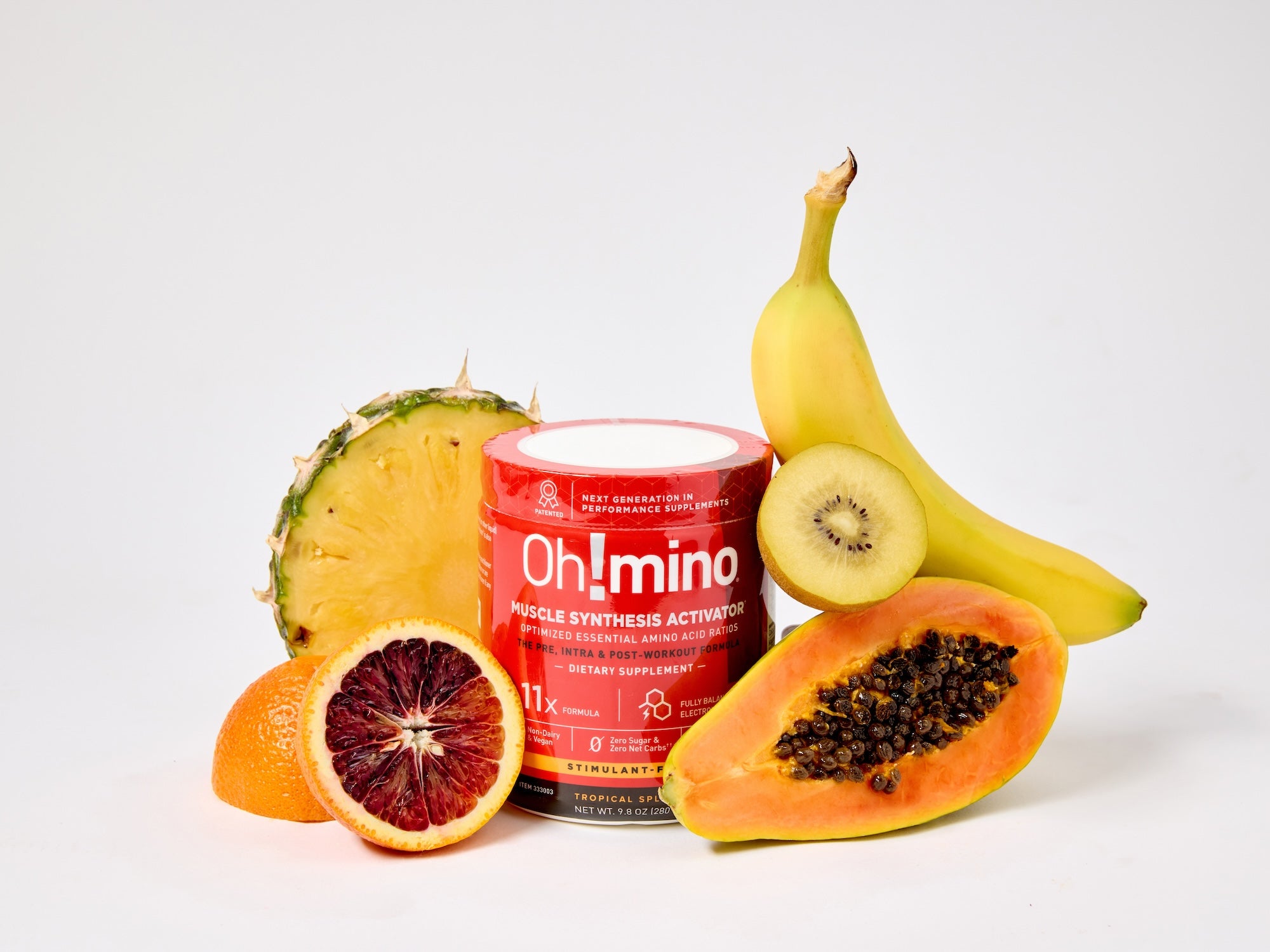
Oh!mino® Muscle Synthesis Activator supplement container.
Oh!mino® Creatine Complex
Our patented Creatine Complex combines clinically studied forms, micronized Creatine Hydrochloride and Creatine Monohydrate, with adaptogens to boost absorption by over 300%. Each scoop delivers 3 grams of free-form creatine to support muscle growth, enhance recovery, and improve training endurance.
Delicious lemon-lime flavor makes it easy to stack with our Muscle Synthesis Activator or use on its own for maximum results. Designed for pre- and post-workout consumption, it complements your training regimen while keeping your supplement routine clean, vegan, and free from unnecessary additives.
Together, Oh!mino® Muscle Synthesis Activator and Creatine Complex provide a comprehensive, science-backed approach to building lean muscle, accelerating recovery, and enhancing performance, all with a clean-label formulation that supports serious gains without compromise.

Creatine remains one of the most researched supplements for muscle volume and strength.
Start Your Transformation with Oh!mino® Today!
Frequently Asked Questions (FAQs)
Can naps help to compensate for poor nighttime sleep?
Naps cannot fully compensate for an overall lack of quality sleep, but they can temporarily increase alertness, perceived wakefulness and energy.
How much sleep do athletes really need?
Normally healthy adults need 7-9 hours of sleep per night, but many athletes benefit from 8-10 hours per night due to rigorous training.
Does caffeine negatively affect muscle recovery and sleep quality?
Consuming caffeine too soon before going to sleep will worsen sleep quality, thereby harming muscle recovery. Caffeine itself is not the problem, rather it is the timing of consumption that can indirectly harm muscle recovery.
Why do some athletes wake up feeling exhausted despite sleeping many hours?
Sometimes individuals will seem to sleep enough hours, yet awake the following morning still feeling tired. Many factors can cause this, including caffeine or alcohol intake, excessive screen time, stress, etc. It is important to examine all aspects of one's life in order to find what is creating poor sleep.
Is it better to train normally with poor sleep or change one’s routine?
If one is feeling fatigued and sleep deprived, it is likely better to perform a lighter training session. Going hard on little sleep heightens one’s injury risk and is a generally unpleasant experience!


