

Key Takeaways
-
Rest and recovery days may be avoided due to a perceived counter-productivity, but it should be an integral part of any athlete’s fitness routine.
-
Rest days include intentionally moving as minimally as possible, allowing for a complete physical rest to recharge sore and tired muscles.
-
Active recovery days can contain walking, yoga or pilates, time outdoors and with loved ones, with the focus being on light movement to stimulate effective muscle recovery.
-
Taking Essential Amino Acids, creatine and herbal adaptogens will quicken recovery and aid in creating enjoyable off-days, with confidence that future workouts will be approached with renewed energy.
-
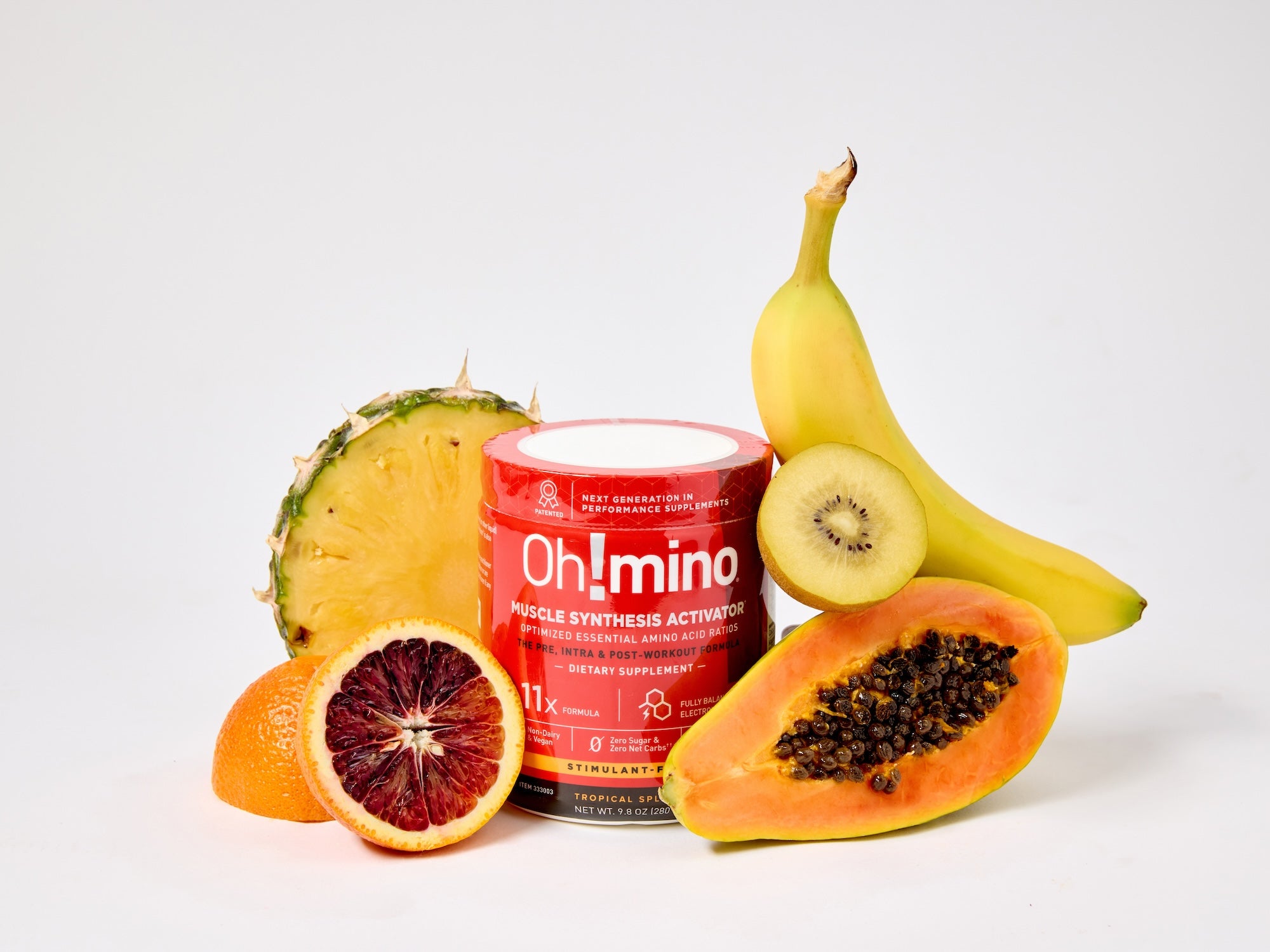
Enhance gains with Oh!mino® Muscle Synthesis Activator and Creatine Complex, delivering all nine essential amino acids, including BCAAs, electrolytes, and adaptogens to accelerate muscle growth, recovery, and performance.
Best Practices For Rest and Recovery Days
One may feel guilty taking days off of the gym, skipping time in the pool or choosing to sit out after a long run. Instead of viewing these days as failures, they should remain a regular part of one’s workout routine. Rest and recovery days are essential for continued energy and prolonged adherence to a training regimen. Below are the benefits that these off-days have to offer, as well as some of the best facets on which to focus when choosing not to lift heavy or run hard.
|
Oh!mino©: Elevate Your Performance. Accelerate Your Recovery. Science-Backed Superiority for Every Fitness Journey Power Your Goals with Proven Results:
The Oh!mino® Advantage: ✓ Patented formula that’s 11x more effective than protein, 20x more effective than BCAAs Choose Your Perfect Formula: Available in refreshing Tropical Slash or Berry Blast flavors, with stimulant-free or caffeinated options. Prefer capsules? We've got you covered with the same powerful formula. Take before, during, or after training—one solution for your entire workout. |

The Importance of Rest and Recovery Days
Taking rest and recovery days does not make an athlete weak-willed and lazy. These off-days harbor myriad health benefits that can only be taken advantage of when rest and recovery is prioritized. Consistent exercise is extremely beneficial for overall wellbeing, but over time, this consistency can begin to wear on the body. Muscle, mental and immune health are all benefited when off-days are accepted.
Benefits for Muscle Health
Constant exercise tears muscle down–this is how muscle is able to grow back larger and stronger. If muscle is not given this chance for repair and growth, then the routinely inflamed muscle tissue will begin to degrade performance. Lean mass will have a chance to heal and repair during an off-day. It may feel counterproductive to choose not to workout, but the only way for muscle to grow stronger is to give it a chance at actual rest.
Benefits for Mental Health
Individuals stop working out most often due to a lack of adherence. Many will set goals too lofty to obtain, or will set a pace of training that is too extreme for most athletes. By instituting intentional off-days, one will be able to take a cognitive break from the strain of training. When fully rested, future workouts will be looked to with inspiration instead of with dread. Fatigue-ridden training will discourage the athlete, as performance markers may not be met. A rested body will allow for more intense workout sessions, generating feelings of accomplishment and satisfaction.
Benefits for Immune Health
Cortisol and other stress hormones are elevated with frequent exercise, and with these elevated hormones comes suppressed immune functioning. Inflammation can also remain high with consistent training. Letting one’s body take an off-day will allow for stress hormones to balance and provide an opportunity for inflammation to decrease. With both of these factors directly affecting immune health, it is wise to build rest days into one’s training routine.
Types of Off-Days
Off-days are usually categorized into two types: rest and active recovery. The goal of these methods are the same, namely, to provide the body with an opportunity for repair and growth. However, rest days and active recovery days come at this goal from slightly different angles.
Rest Days
The process of a rest day is to keep the body from exerting unnecessary energy. Some will sleep in, watch TV, order food and/or go to bed early. Those with rest days on their schedule use this time of stillness to increase intentional movement in the future.
Active Recovery Days
Many athletes prefer active recovery days, in which the goal is consistent and light movement. This movement is not to break down muscle and create instances of fatigue. Instead, performing different activities will keep the blood flowing throughout the body, stimulating muscle synthesis while keeping the mind alert and active.

Woman with smart watch sleeping in bed.
Best Practices for Rest Days
If rest days sound more pleasing, then that is what one should prioritize. Adherence to the process of exercise will be strengthened when off-days are upheld and anticipated. With the desire for rest days, a few areas of life must be supported.
Keeping the Mind Active
It can be easy to consume media for an entire off-day. Taking some time for this during the day can be beneficial, but an excess will be negative for mental health. Brain fog and drowsiness will arise, with the threat of lasting until the next day. This may get in the way of future training sessions. To avoid this, reading, board games, writing, thinking, etc., should be utilized. This will keep one’s brain feeling sober and alert, ready for the next day.
Staying Social
Time with friends and family is wonderful for rest days. Talking and spending time with loved ones will keep an active mind and a restful body. Going out and getting food together will brighten one’s day and encourage positive neurological health.
Getting Enough Sleep
With the opportunity of a rest day, sleep should be a priority. Extra sleep will allow for heightened levels of muscle synthesis, speeding recovery and lean tissue growth. With more sleep, following workouts will be approached with renewed vigor. Sleep will also serve to strengthen immune functioning and reduce inflamed lean mass.
Best Practices for Active Recovery Days
Active recovery days are intended to keep the body moving to pump blood and fresh oxygen to tired, weary muscles. For those who prefer to stay active than stay at home, active recovery days can bring renewed life and energy. The basic principles of active recovery are as follows:
Light Exercise
Light exercise during active recovery days can be revitalizing and life-giving. However, it is important to not overexert, as the base motive for active recovery days is to rest tired muscles. Light exercise can include yoga, pilates, walking or easy, recreational sports. It is meant to pump oxygen to inflamed and torn muscles and to keep the mind engaged.
Easy Movements
Active recovery days should also include stretching and rolling. Stretching muscles allows for improved blood flow and increased flexibility. This will enhance muscle synthesis and lessen injury risk, respectively. Using a roller on sore muscles also increases blood flow and improves healing of microtears.
Time Outside
Time spent outside will encourage more movement throughout the day, as well as providing crucial vitamin D. Taking an easy hike or a nature walk is an excellent active recovery pastime. Spending time outdoors has been clinically studied for its effect on expediting the healing process. It also has been shown to improve mental health, thereby indirectly improving adherence to one’s training routine. A healthy mind stimulates healthy habits.

Woman stretching on a hill overlooking the city.
Diet for Rest and Recovery Days
Some individuals may use off-days as their “cheat meal” days, indulging certain dietary desires. As long as macronutrient needs are met, these cheat meals can be consumed in moderation. However, best practice is to continue with one’s daily diet. With less activity, some adjustments can be made, however, primary macro-goals should be continuously met.
Prioritize Protein
Protein must be the focus of macronutrient consumption. An athlete should aim to eat about one gram of protein per pound of body weight, even on off-days. Off-days are used by the body to synthesize muscle; it must have enough protein with which to repair. Enough protein will result in recovered muscles, with recovered muscles will come energized workouts.
Caloric Intake
Even though caloric expenditure may be lessened during off-days, daily caloric needs remain the same. Still aim to hit macro-goals during rest so as to keep the body prepped for the next day. Overeating or under-eating can have negative effects on upcoming performances.
Do Not Skip Carbs
Some may feel the need to skip carbohydrates on rest days, saving carbs for one’s training window. It is important to still eat carbs during off-days as they will help to regulate cortisol, replenish glycogen stores and support muscle recovery and the immune system. Performance will be supported with carb consumption, even on rest and recovery days.
Supplements for Rest and Recovery Days
It is still entirely beneficial to take supplements during rest and recovery days, namely Essential Amino Acids, creatine and adaptogens. These supplements will quicken recovery and support lean mass growth and retention, while prepping the athlete for future workouts.
Essential Amino Acids
Essential Amino Acids are the building blocks of muscle growth. The body cannot produce EAAs on its own, making a balanced blend of EAAs crucial for optimal muscle synthesis. Muscles seek to recoup and recover during off-days, creating the ideal environment for EAA supplementation. Any soreness will be mitigated and the athlete will feel energetic for his next training session when EAAs are taken.
Creatine
Creatine serves to improve muscle recovery by pulling extra water into muscle cells. It supports adenosine triphosphate production, which is the energy that muscles use when working out. It is important to take creatine during off days so as to keep ATP production high. Only with daily creatine consumption will ATP continue to be supported at an increased rate.
Adaptogens
Herbal adaptogens have been studied for their many positive health effects. Adaptogens help to improve mood and focus while reducing stress and inflammation. They are the ideal support for off-days, creating a space of mental ease and lean tissue support.
Enhance Your Gains with Oh!mino® Muscle Synthesis Activator & Creatine Complex
Take your muscle-building journey to the next level with Oh!mino®’s next-generation supplements, specifically engineered to maximize strength, endurance, and recovery.
Oh!mino® Muscle Synthesis Activator
Our patented formula delivers all nine essential amino acids, including the crucial BCAAs, in an optimal ratio to fuel muscle growth while minimizing soreness. Designed for pre-, intra-, and post-workout use, it stimulates muscle protein synthesis up to 11x more than whey protein and 20x more than standalone BCAAs, helping you recover faster, reduce stiffness, and train harder.
Enhanced with adaptogens and fully balanced electrolytes, it supports endurance, hydration, and overall performance. Non-dairy, vegan, and free from sugar, carbs, calories, and artificial additives, it’s a clean, science-backed supplement trusted by athletes.

Oh!mino® Muscle Synthesis Activator supplement container.
Oh!mino® Creatine Complex
Our patented Creatine Complex combines clinically studied forms, micronized Creatine Hydrochloride and Creatine Monohydrate, with adaptogens to boost absorption by over 300%. Each scoop delivers 3 grams of free-form creatine to support muscle growth, enhance recovery, and improve training endurance.
Delicious lemon-lime flavor makes it easy to stack with our Muscle Synthesis Activator or use on its own for maximum results. Designed for pre- and post-workout consumption, it complements your training regimen while keeping your supplement routine clean, vegan, and free from unnecessary additives.
Together, Oh!mino® Muscle Synthesis Activator and Creatine Complex provide a comprehensive, science-backed approach to building lean muscle, accelerating recovery, and enhancing performance, all with a clean-label formulation that supports serious gains without compromise.

Creatine remains one of the most researched supplements for muscle volume and strength.
Start Your Transformation with Oh!mino® Today!
Frequently Asked Questions (FAQs)
How often should rest and recovery days be incorporated in one’s routine?
Most athletes prefer to take one or two off days per week, however, this can vary with injury, illness, exercise intensity, skill level and/or life circumstances.
Are rest days more important for beginners or experienced athletes?
While rest and recovery days are beneficial for all athletes, beginners may need more off-days initially than experienced athletes.
Can rest days help to prevent injury?
Of course! Rest and recovery days allow for reduction of inflammation, neuromuscular fatigue and joint stress, all of which–when not appropriately managed–may create an injury-prone environment.
Is soreness a reliable indicator that a rest and recovery day is needed?
Not necessarily. Athletes may not feel sore after some workouts, yet a recovery day may still be warranted due to inflamed tissue and subsequent performance degradation.
Should hydration strategies change on off days?
No! Keep hydration consistent during rest and recovery days as fluids support nutrient transport, circulation and joint health.


