

Key Takeaways
-
Dehydration is most often experienced when working out if proper fluid intake has been ignored.
-
Dehydration can cause early fatigue to set in, dizziness, lightheadedness, headaches, muscle cramps and/or a decline in athletic performance.
-
A decline in athletic performance can result in an injury-prone environment, as well as a weaker recovery post-training.
-
Proper hydration in and around one’s training window–as well as throughout daily life–will combat dehydration; our Muscle Synthesis Activator is key in supplying a balanced electrolyte profile for balanced fluid levels.
-
Enhance gains with Oh!mino® Muscle Synthesis Activator and Creatine Complex, delivering all nine essential amino acids, including BCAAs, electrolytes, and adaptogens to accelerate muscle growth, recovery, and performance.
Understanding Dehydration: Signs and Impact on Performance
Dehydration is a silent threat that many are unaware is affecting their performance. Regardless of one’s preferred athletic activity, dehydration must be intentionally mitigated. Confusing fallbacks in performance may be attributed to how one is feeling or what their exact supplement stack is at that moment, but often it can be the result of insufficient hydration.
|
Oh!mino©: Elevate Your Performance. Accelerate Your Recovery. Science-Backed Superiority for Every Fitness Journey Power Your Goals with Proven Results:
The Oh!mino® Advantage: ✓ Patented formula that’s 11x more effective than protein, 20x more effective than BCAAs Choose Your Perfect Formula: Available in refreshing Tropical Slash or Berry Blast flavors, with stimulant-free or caffeinated options. Prefer capsules? We've got you covered with the same powerful formula. Take before, during, or after training—one solution for your entire workout. |

What is Dehydration?
The process of becoming dehydrated is simple: an individual losing more fluid than he is consuming. For the athlete, this fluid is lost primarily through sweat, but it will be spent through urinating and respiration (water vapor when exhaling), too. If fluid levels are not replenished, many adverse symptoms will occur.
Who Most Often Experiences It?
Athletes are those at most frequent risk for experiencing dehydration, however, many moderately active individuals may too suffer bouts of imbalanced fluid levels. When the athlete is in the throes of intense training, much sweat is spent. Often, these athletes are either too focused to consume liquids properly, or will do so in inadequate amounts. For those who do not regularly train, the absence of enough water consumption throughout the day can also lead to dehydration.
What are Its Symptoms?
Many symptoms will come with dehydration, with different symptoms affecting athletes in different ways (depending on how they specifically engage in athletic output). Often, dehydrated individuals will experience dizziness, lightheadedness, fatigue, a dry mouth, headaches, altered urine output, muscle cramps, and a decline in athletic performance. Severe dehydration may result in a rapid heart rate, low blood pressure and impaired cognition.
How Can It Be Avoided?
Consuming more fluids in and around one’s training window is essential to keep dehydration at bay. The amount of fluid and the timing of consumption may vary based on one’s activity, but one should routinely consume adequate water throughout the day, regardless. If one begins to notice the telltale symptoms of dehydration setting in, resting and consuming water and/or a drink with high electrolyte content is necessary.
Dehydration and Weight Lifting
Weight lifting is a prominent form of athletic activity, one that requires intentional monitoring of the body in order to stay injury-free. Many may not consider weight training as having the potential to create dehydrated athletes. However, due to its intensive nature and its capacity to create an atmosphere of fluid-craving lean mass, dehydration is a constant threat.
How are Weight Lifters Dehydrated?
When the athlete lifts weights, the body produces sweat to cool off. However, even if one does not sweat as intensely during weight training, internal fluids will shift to support working muscles. This may cause an imbalance with one's intracellular fluid levels. One who frequently lifts weights may not see consistent hydration as fully necessary for their attention, but in order to prevent a myriad of symptoms, a certain degree of intentionality is required.
What are Its Symptoms?
Dehydration can provide a host of symptoms for the weight lifter, all of which hinder their performance and increase injury risk. Early fatigue will set in, accompanied by a weakened strength output and decreased pumps. Dizziness, headaches and muscle cramps can also occur.
How Can It Be Avoided?
Consuming adequate liquid before, during and after training is essential. Not all liquids are the same, however. If one prefers caffeine for his workouts, coffee can be an easy choice. Coffee may stimulate more energy, but it will dehydrate the weight lifter. Drinking water with our Muscle Synthesis Activator will keep balanced fluid levels for the weight trainer.

Man drinking from bottle and looking at a smartphone.
Dehydration and Endurance Training
Endurance trainers receive the most attention in regard to hydration and fluids lost through sweat. Whether swimming, running, sprinting, hiking or cycling, much sweat is spent throughout the activity. Incurring many symptoms if not hydrated, dehydrated endurance athletes will see marked losses in their performance.
How are Endurance Athletes Dehydrated?
The longer one engages in an endurance event and/or the higher the intensity, the hotter one’s body will become. The individual will begin to sweat to cool off the working body. Because many athletes are so focused on the training, they may forsake adequate hydration practices. More water is needed when running five miles than is needed when sitting. This intense fluid loss, if not treated, will result in much discomfort.
What are Its Symptoms?
Early fatigue can result from dehydration, accompanied by dizziness, an elevated heart rate and an impaired concentration. The athlete’s performance will dip, and muscle cramps, overheating and nausea will occur if the athlete continues to push his limits. This is a prime opportunity for injury, making adequate hydration key.
How Can It Be Avoided?
Begin each session with adequate hydration, and continue to hydrate at regular intervals through one’s training window. It can be beneficial to consume electrolytes during and after a workout. This will stave off dehydration intra-workout and support proper recovery post-workout.
Dehydration and Yoga/Pilates
One may not consider yoga and pilates to be activities that can inspire dehydration. Even so, any athletic endeavor has the capacity to shift fluid levels into an imbalanced state. Whether yoga and pilates is one’s primary mode of athleticism or if these disciplines are reserved for one’s active rest routine, hydration is needed.
How are These Athletes Dehydrated?
Sweating from intense pilates sessions and/or prolonged poses will initiate the process toward dehydration. If entering the session with insufficient hydration, symptoms may have an earlier onset. Fluid levels will also lower via respiration during these activities. Additionally, hot yoga and hot pilates intentionally creates an atmosphere to stimulate sweat. Enough fluids before, during and after workouts is vital for preserving balanced intracellular fluid levels.
What are Its Symptoms?
A dry mouth and an intense thirst may first accompany dehydration in this scenario. When fatigue sets in, one may also feel lightheaded and dizzy while experiencing headaches. Performance will decline, which in yoga and pilates will result in reduced balance and stability, as well as muscle tightness.
How Can It Be Avoided?
Drinking water throughout the day will prepare the individual for yoga and/or pilates session(s). During longer sessions and/or hot sessions, it will be necessary to sip on fluids throughout the duration. Consuming enough electrolytes post-session will encourage quicker recoveries and will fight any encroaching symptoms of dehydration.

Woman performing single-leg, kettlebell RDL.
Dehydration in the Everyday
Becoming dehydrated is not just relegated for athletic performance, though it does most often occur then. Even so, individuals in their everyday lives can feel the effects of imbalanced fluid levels due to a number of factors. Not believing that one will become dehydrated may lead to an absence of consuming enough fluids. Whether one works a desk job or is a professional athlete, consistent hydration is essential for overall health and wellbeing.
How Prevalent is Dehydration?
Many individuals drink multiple cups of coffee each day, often in place of water. This can pave the road to dehydration due to the increased urine output coffee can stimulate. Energy drinks with high caffeine levels can also stimulate more urine output. Additionally, much alcohol is consumed by the public each day--it too is strongly diuretic and will cause internal dehydration.
What are Its Symptoms?
Some may feel increased fatigue throughout the day, as well as headaches coming on in the late afternoon. If also experiencing a dry mouth, this may be the effects of dehydration. Often, the body is craving water and basic hydration, instead of a third cup of coffee.
How Can It Be Avoided?
Consistent sipping on water, milk or electrolyte drinks throughout the day will keep one’s intracellular fluid levels balanced. If one is planning on working out later in the day, it may be beneficial to slightly increase fluid intake as the training window approaches. Opting for hydrating drinks instead of alcohol in the evening will allow one to enter the following day with a hydrated body.
Oh!mino’s Solution
Whether one works out six days per week or is a weekend warrior, Oh!mino Muscle Synthesis Activator will keep one fully hydrated and will stave off the aforementioned symptoms. Our patented blend contains all nine Essential Amino Acids and five key electrolytes, both of which support true hydration.
Essential Amino Acids
The body needs each EAA in order to achieve optimal muscle synthesis, as it cannot produce these ingredients on its own. When one consumes a balanced blend of EAAs, intracellular water uptake is made more efficient, thereby combating dehydration. With EAAs in one’s system, muscle will have what it needs for repair and growth, as well as reducing exercise-induced lean tissue breakdown. This latter case indirectly aids in one’s fluid balance as it keeps water distributed evenly throughout the body.
Five Key Electrolytes
The primary source of hydration from our Muscle Synthesis Activator are the five electrolytes we have included in our all-natural product. Most electrolyte products only contain two electrolytes: sodium and potassium. This is due to cheap production cost as compared to other essential electrolytes. To support those who support us, we have included five electrolytes in a premium blend in order to truly hydrate the individual. With sodium, potassium, calcium, magnesium and chloride, the athlete will be fully supported for all athletic endeavors.
Timely Supplementation
One can sip on our MSA throughout the day to support balanced fluid levels and to avoid unnecessary fatigue and uncomfortable headaches. However, consumption in and around one’s training window is the most optimal to fight dehydration while working out. Taking one or two scoops 20-30 minutes prior to one’s workout will set the athlete up for a hydrated and energy-filled session. With one scoop intra-workout, fluid levels will be stabilized throughout the activity, staving off early fatigue. One or two scoops within 30 minutes of finishing one’s training will encourage efficient muscle synthesis and will replenish electrolytes and fluid lost via training.
Enhance Your Gains with Oh!mino® Muscle Synthesis Activator & Creatine Complex
Take your muscle-building journey to the next level with Oh!mino®’s next-generation supplements, specifically engineered to maximize strength, endurance, and recovery.
Oh!mino® Muscle Synthesis Activator
Our patented formula delivers all nine essential amino acids, including the crucial BCAAs, in an optimal ratio to fuel muscle growth while minimizing soreness. Designed for pre-, intra-, and post-workout use, it stimulates muscle protein synthesis up to 11x more than whey protein and 20x more than standalone BCAAs, helping you recover faster, reduce stiffness, and train harder.
Enhanced with adaptogens and fully balanced electrolytes, it supports endurance, hydration, and overall performance. Non-dairy, vegan, and free from sugar, carbs, calories, and artificial additives, it’s a clean, science-backed supplement trusted by athletes.

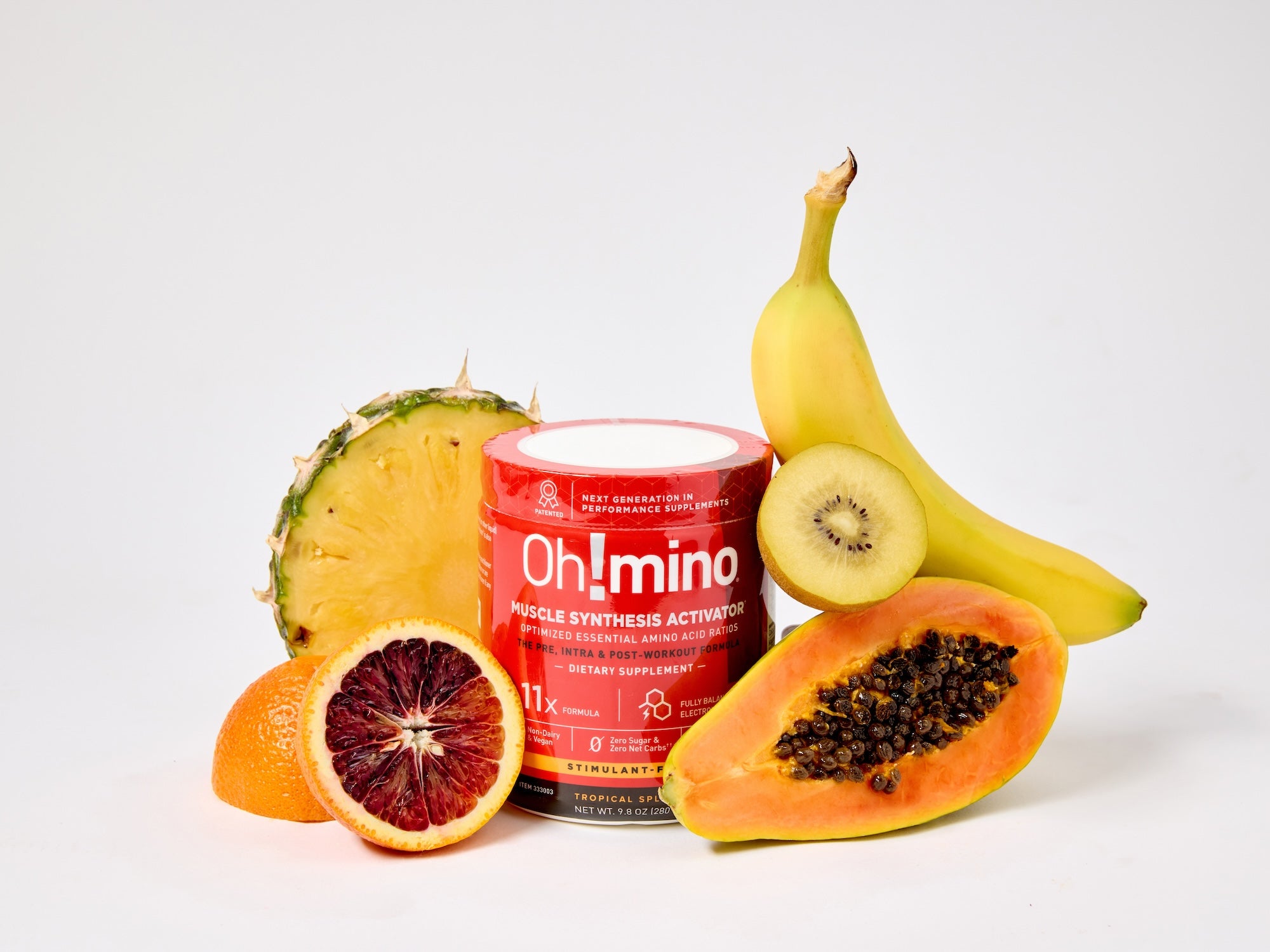
Oh!mino® Muscle Synthesis Activator supplement container.
Oh!mino® Creatine Complex
Our patented Creatine Complex combines clinically studied forms, micronized Creatine Hydrochloride and Creatine Monohydrate, with adaptogens to boost absorption by over 300%. Each scoop delivers 3 grams of free-form creatine to support muscle growth, enhance recovery, and improve training endurance.
Delicious lemon-lime flavor makes it easy to stack with our Muscle Synthesis Activator or use on its own for maximum results. Designed for pre- and post-workout consumption, it complements your training regimen while keeping your supplement routine clean, vegan, and free from unnecessary additives.
Together, Oh!mino® Muscle Synthesis Activator and Creatine Complex provide a comprehensive, science-backed approach to building lean muscle, accelerating recovery, and enhancing performance, all with a clean-label formulation that supports serious gains without compromise.

Creatine remains one of the most researched supplements for muscle volume and strength.
Start Your Transformation with Oh!mino® Today!
Frequently Asked Questions (FAQs)
How much fluid should an individual consume each day?
Fluid needs vary per person, however, most males need about 3.7 liters of water per day, with women needing 2.7 liters of water per day. Fluid needs will increase with consistent exercise and significant sweating.
Can drinking too much water be harmful?
Yes. Too much fluid consumption can result in confusion, nausea, headaches, and diluted blood sodium levels. This will cause a decline in performance.
Does hydration benefit muscle synthesis?
Absolutely! By supporting nutrient delivery and waste removal, muscle soreness is reduced and overall recovery is quickened.
How can one determine if they are well-hydrated prior to training?
Minimal thirst, stable energy, pale-yellow urine and an absence of headaches are all indicators of balanced intracellular fluid levels.
Do climate and altitude affect hydration needs?
They do. A hotter climate will cause more sweat, thereby increasing electrolyte needs. A higher altitude raises water lost through respiration, also necessitating electrolyte supplementation.


